
Could a $100,000 Prize Help Young People Learn Civics?
In a country where fewer than a quarter of eighth graders are proficient in civics, the National Civics Bee rewards young people for learning how government works and how they can participate
By Wilfred Chan
Feb 3, 2026
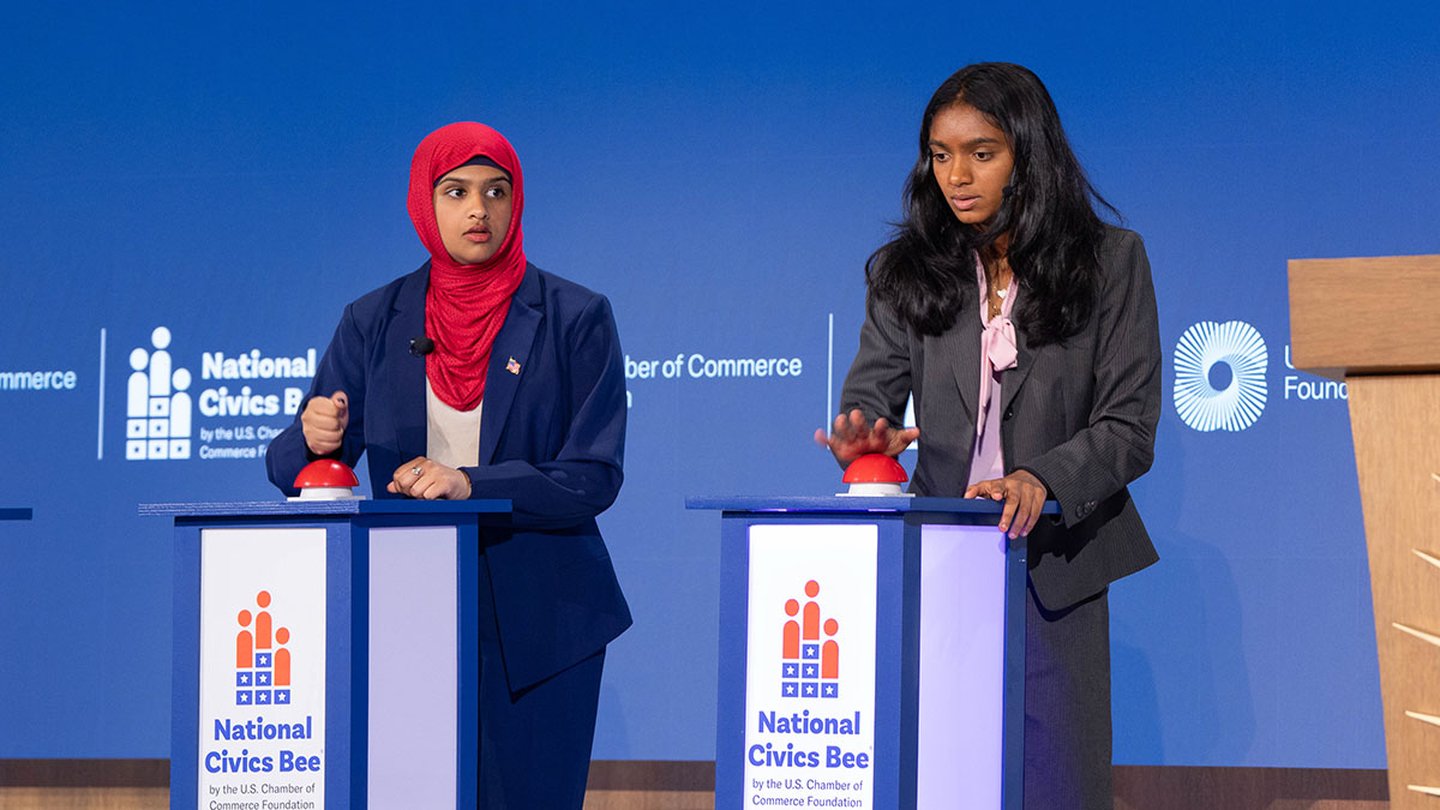
The opportunity that led to 14-year-old Maanha Nasir’s first-ever trip to the nation’s capital, where she won a five-figure civics prize, almost died in her spam folder. She had never heard of the National Civics Bee. Her school, a self-paced online program belonging to one of Washington state’s lowest-ranked districts, offered no civics classes. When Nasir received an email inviting her to apply for the competition in 2024, she assumed it wasn’t meant for her.
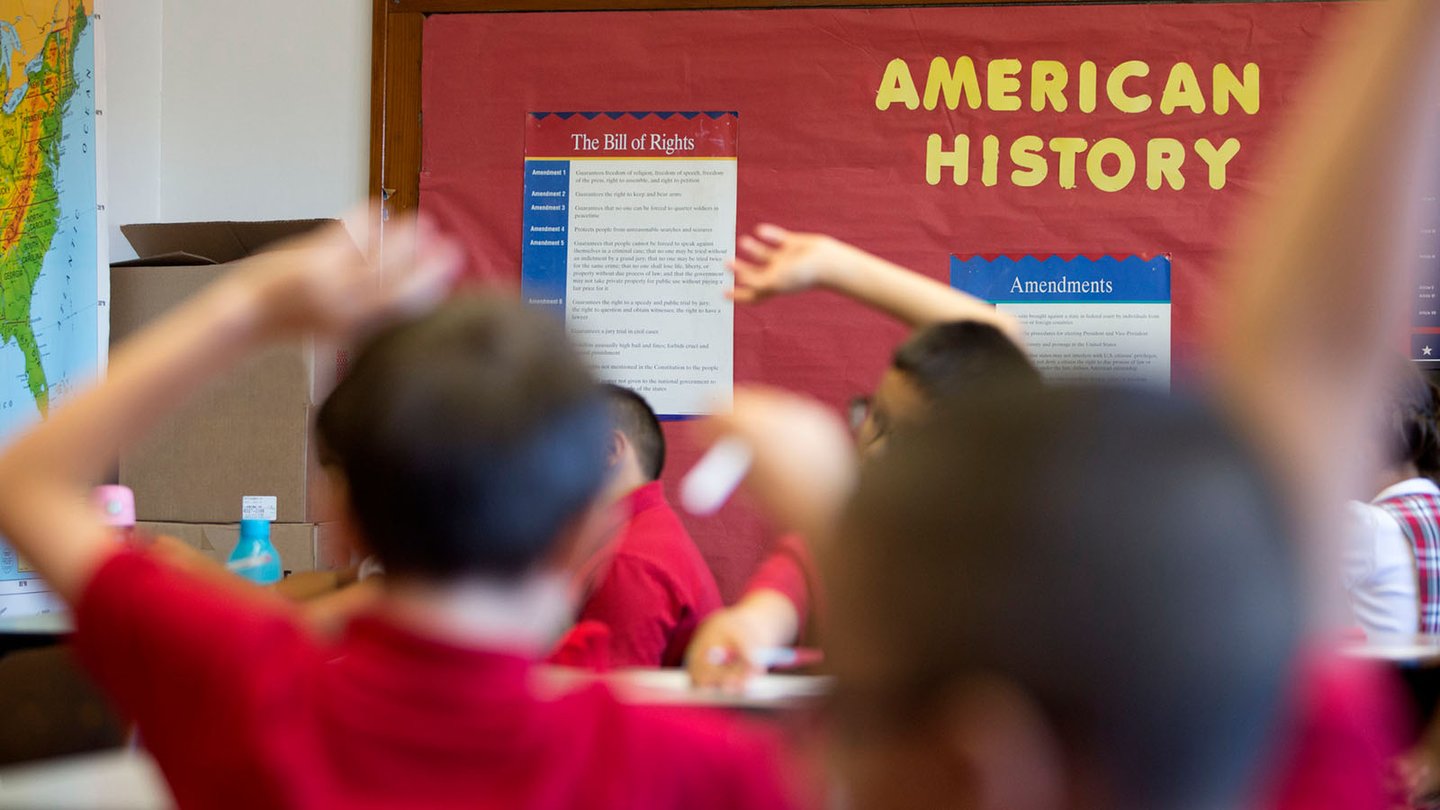
Civics — referring to the knowledge, skills, and habits people need to participate in a democratic society — has become a rare part of K–12 education. According to a 2024 survey by America’s Promise Alliance, most young people say they discussed civics in school just a few times or not at all during the past year. Just one-quarter say they talk about civics at out-of-school activities.
What finally convinced Nasir to apply for the Bee was encouragement from a friend who had competed previously. To be selected, sixth, seventh, and eighth graders submit a proposal to address an issue in their community. Nasir had been researching inequality among her state’s public-school districts, so she sent in an essay about it on a whim. She was stunned when she was named to compete in her local Civics Bee round, the start of what she calls a life-changing journey.
In an increasingly polarized country, the National Civics Bee, organized by the U.S. Chamber of Commerce Foundation with support from Carnegie Corporation of New York and other funders, is part of a growing wave of programs to address what educators, scholars, and policymakers say is a crisis in civic knowledge. In 2022, only 22 percent of eighth graders reached the “proficient” level in civics on the National Assessment of Educational Progress, also known as the Nation’s Report Card. One-third of eighth graders performed below the “basic” level, meaning they would likely be unable to describe the fundamental structure of the U.S. government. Adults aren’t doing great, either. A 2025 survey by the U.S. Chamber of Commerce Foundation found that more than 58 percent of Americans failed a basic U.S. civic literacy quiz. “The state of civic knowledge in America is too low,” says Hilary Crow, who oversees the National Civics Bee as vice president of civics at the U.S. Chamber Foundation. “That leads to a lack of understanding of how to participate and create positive change.”
Today, support for civics is growing, driven by its ability to bridge political divides. A 2022 national survey by iCivics, a Carnegie-supported nonprofit working to advance civic learning, found that four in five likely voters said civics education is important and two-thirds supported more funding for it. In 2021, a cross-ideological group of civics organizations, scholars, and educators published a framework for civics learning called Educating for American Democracy, organized by iCivics and funded by a grant from the Department of Education. The framework advocates for teaching students not only facts about U.S. history and government, but skills like debating respectfully and organizing community projects. In September 2025, the Department of Education announced more than $153 million in grants for civics education in advance of the 250th anniversary of the Declaration of Independence.
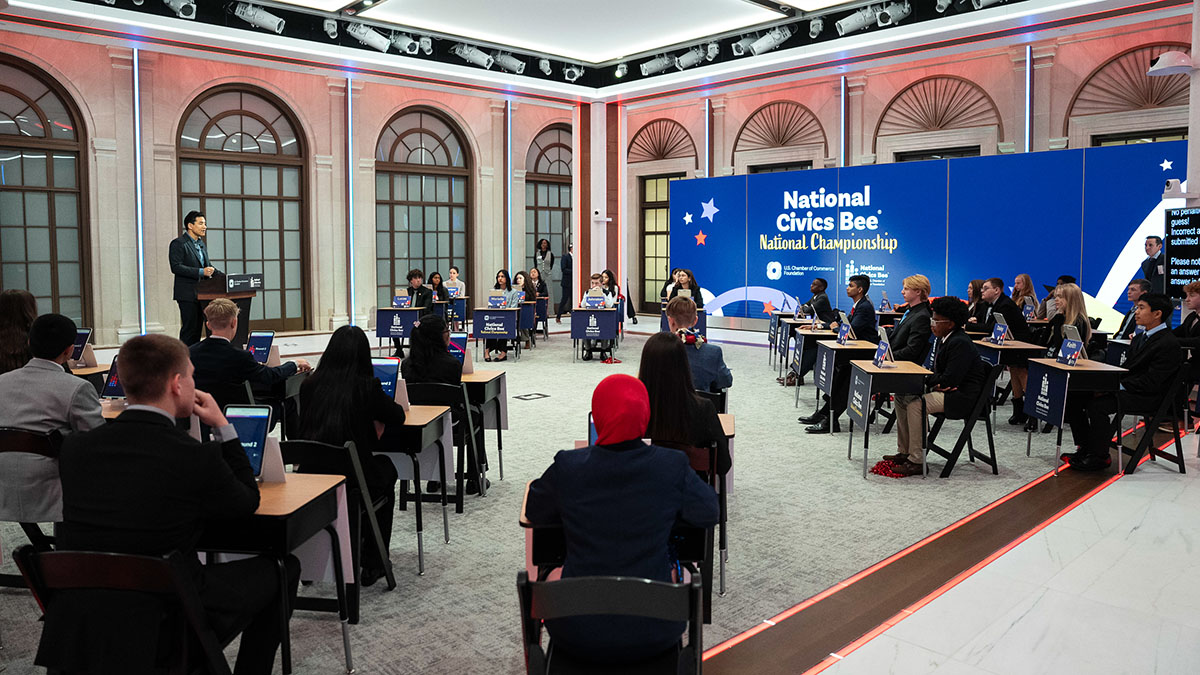
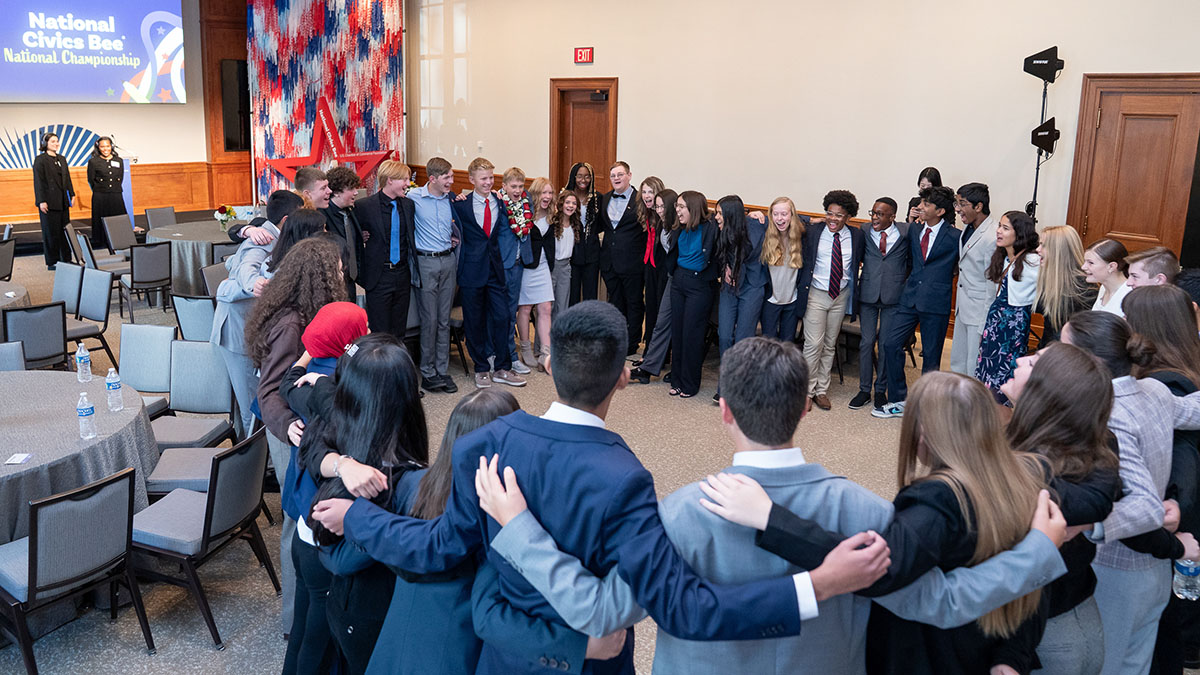
Modeled after traditional spelling and geography bees, the National Civics Bee adds a substantial incentive for civic learning — a grand prize of a $100,000 education savings plan contribution. Launched in 2022, it’s both a knowledge competition (sample question: “Under the system of federalism, which level of government has the power to run elections?”) and a pitch contest, with students proposing projects to address community issues before a panel of judges. In 2025, more than 12,000 students participated in the essay round, and finalists from 39 states advanced through local and state competitions before converging in D.C. for an adrenaline-spurred, game show–like final. Appropriately, the 2025 edition was hosted by television personality Mario Lopez.
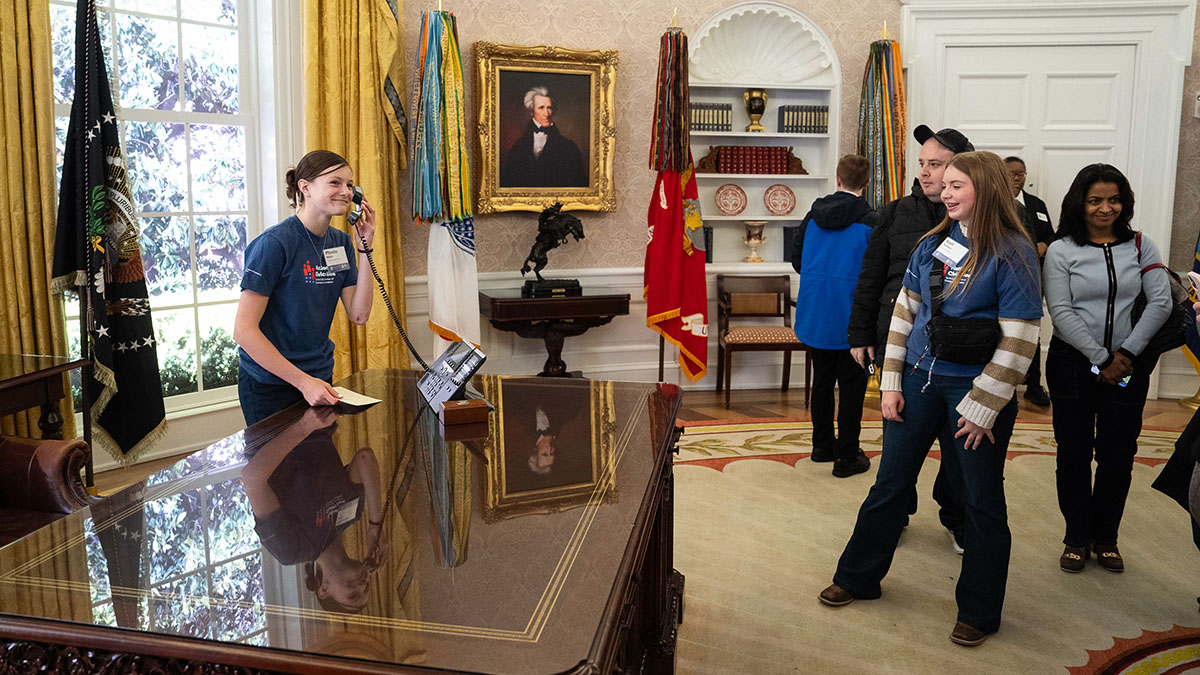
The U.S. Chamber Foundation is aiming to reach students like Nasir who may have few other civics opportunities: four in five National Civics Bee contestants had never taken a civics or U.S. government course before competing, according to a December 2025 survey by the U.S. Chamber Foundation and Johns Hopkins University. It also wants to reach their parents. Nasir says a “feeling of inadequacy” nagged at her through her long hours of preparation. What helped was support from her mother, who grew curious about U.S. history as she helped Nasir study, and her father, who she calls her “cheerleader.” She received no help from her teachers or school, reflecting a broader issue: for decades, civics education in the United States has been neglected.
The Case for Civics Education
The U.S. Chamber Foundation began its civics programming in 2019 amid growing concerns from the U.S. business community that polarization poses economic risks. That year, it copublished The Business Case for Civics Education with Harvard Business Review, noting that GDP is highest in countries with the most stable political systems. “We see a strong relationship between the strength of our democracy and the strength of our economy,” says Crow, who adds that civic skills, like critical thinking and collaborating with others across differences, are workplace skills.
The U.S. Chamber Foundation’s civics work comes at a moment when civics education is regaining momentum after decades of policy that prioritized STEM-focused instruction in the name of economic competitiveness. Emma Humphries, the chief education officer at iCivics, traces the decline of civics to the 1957 launch of the Russian satellite Sputnik. “After the launch, our entire national confidence plummeted as we saw our sworn enemies’ satellites swirling above us in our front yards,” she says. “The federal government got involved in education to prioritize STEM subjects, and it cut back on others.”
That trend continued with the influential 1983 Department of Education report A Nation at Risk, which framed poor school performance as a threat to American security, and federal laws like No Child Left Behind in 2002 and Race to the Top in 2009, which tied funding to test scores in subjects like math and reading. In 2024, the federal government spent $7.7 billion on STEM education, according to the executive branch’s 2024 Report on the Committee on STEM. By contrast, it allocated just $23 million to civics education in 2024, according to an analysis by CivXNow, a project of iCivics.
The big investment in STEM hasn’t paid off for Americans equally, says Daniel Stid, a senior fellow at the American Enterprise Institute think tank, who points to declining socioeconomic mobility in the United States — especially for working-class and non-college-educated Americans — and increasing polarization. “Though the push for STEM has been couched in terms of national competitiveness,” Stid says, “it’s concerned with how individual students are doing, not how communities are doing.”
In 2022, Samantha Sandhaus, then a student at Philadelphia’s Central High School, noticed that while some students at her school were going hungry, other students were throwing away certain food items untouched. She decided to start a community fridge to collect extra food for anyone to access throughout the day.
When the initiative caught on, Sandhaus decided to scale it beyond her campus and established a nonprofit called Feeding Philly. That led to burnout. “I didn’t have a very healthy approach to leadership because it felt like the stakes were always very high,” she says. “And sometimes it feels like other people around you just don’t care as much, which can feel isolating.”
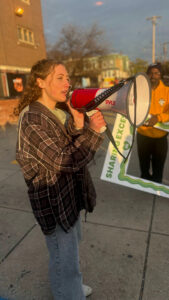
In 2022, Philadelphia high school student Samantha Sandhaus launched a community project called Feeding Philly. Now in college, she mentors younger student leaders through the Carnegie Young Leaders program. (Credit: Samantha Sandhaus)
Sandhaus soon found support. After being selected for the Civic Spring Project, a fellowship launched in 2020 at the nonprofit Institute for Citizens & Scholars, she was paired with two mentors — one, an experienced professional, and the other, a college student from Kentucky who had led a voting initiative as a teenager. The pair coached Sandhaus in weekly calls, advising her to delegate and work with partners.
The fellowship, now called Carnegie Young Leaders for Civic Preparedness with funding from Carnegie, helps young people participate in their communities, says Rajiv Vinnakota, president of the Institute for Citizens & Scholars. A 2025 study by the organization found that while nine in 10 members of Gen Z care about their communities, their biggest barriers are not knowing how to start and doubting they can make a difference. One of their biggest motivators? Witnessing their friends get involved. “Young people get so much value and a sense of agency from having someone in their age group who can say, ‘I’ve actually done this, and I can help you,’” Vinnakota says.
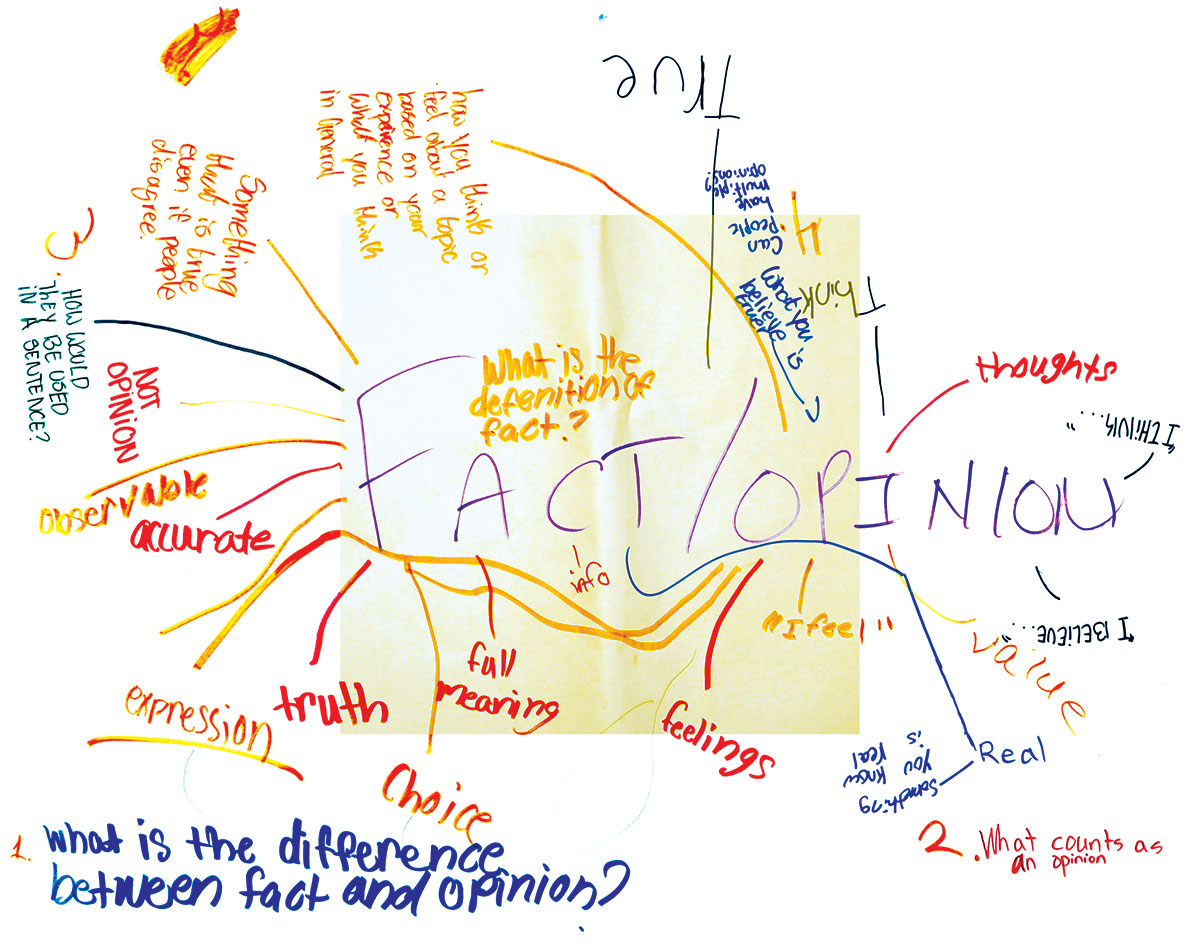
Another finding from the 2024 survey by America’s Promise Alliance: few young people trust public institutions — just 21 percent trust the education system and 12 percent trust government leaders — but more than two-thirds trust their peers at school. These findings inform the work of Generation Citizen, a Carnegie-supported nonprofit that works with schools to teach students how to address problems in their communities. The first steps of the curriculum build trust within classrooms, explains the organization’s CEO, Elizabeth Clay Roy. “Students are encouraged to practice civil discourse with each other, ground comments in evidence, and identify common experiences,” she says.
‘Projects to Improve the World’
It’s a cold and windy November morning in Washington, D.C. Arriving from Washington state, Maanha Nasir is amazed to see everyone on the street in corporate attire, some carrying briefcases — very different from the hiker-chic of the Pacific Northwest. “Somewhere along the way, I started to see myself in D.C.,” she says. “It has this quality where it just makes you imagine things.”
Nasir was there to compete in the 2025 National Civics Bee championship as one of 39 middle-school-age contestants. The first round: a 90-minute team challenge in which they were randomly grouped to develop a response to a prompt, while judges graded their civics skills and dispositions. “The idea is that studying alone isn’t going to win you the championship,” says the U.S. Chamber Foundation’s Crow. “You really have to represent what being a good member of the community looks like.”
This year’s prompt asked teams to propose ways to improve access to technology for low-income students and reduce what’s often called the “digital divide.” Nasir felt insecure — her online education meant she had less experience in group settings. Her team ran into conflict early on. “Someone pitched the idea of starting a nonprofit, and I countered that nonprofits are hard to establish and scale,” Nasir says. About halfway through, “there was this moment when we worked past our differences and came to a mutual deal, including input from everyone,” Nasir recalls. “It was so harmonious. I was just in shock.”
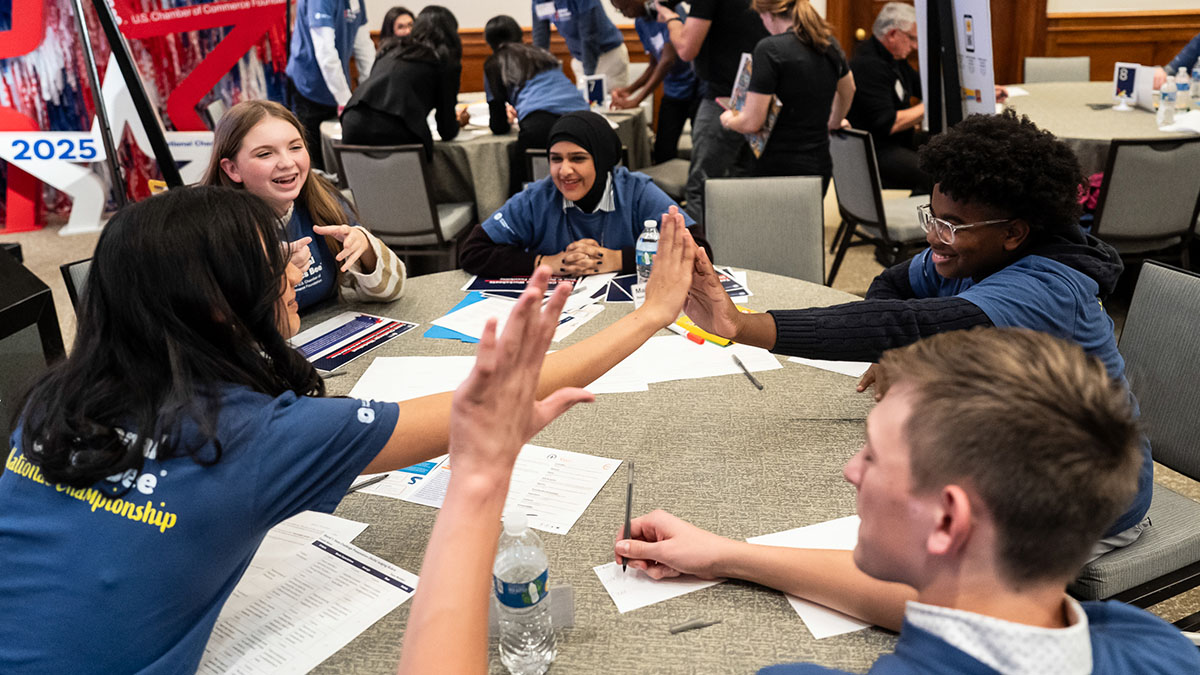
Then it was time for the quiz round, with questions designed by the nonprofit Bill of Rights Institute, a Carnegie grantee. David Bobb, the president of the nonprofit and a co-author of the Educating for American Democracy framework, says his team generated “thousands” of questions with the help of scholars and educators; game show standards experts were consulted to ensure the questions would be deployed fairly. The questions “aren’t about ‘gotchas,’ aren’t about trivia, but are about trying to push kids back to the foundations, making them think about the ‘why’ behind our institutions and core ideas,” he says. Nasir’s long hours studying with her parents paid off: she sailed through.
That left Nasir as one of ten finalists chosen to present her project on the national stage. She had spent months imagining this moment but didn’t realize there would be so many cameras. Weirdly, she didn’t feel nervous. “It felt like I was living it outside of my body,” she says. “I went up on stage, and for the first time, my hands didn’t shake.”
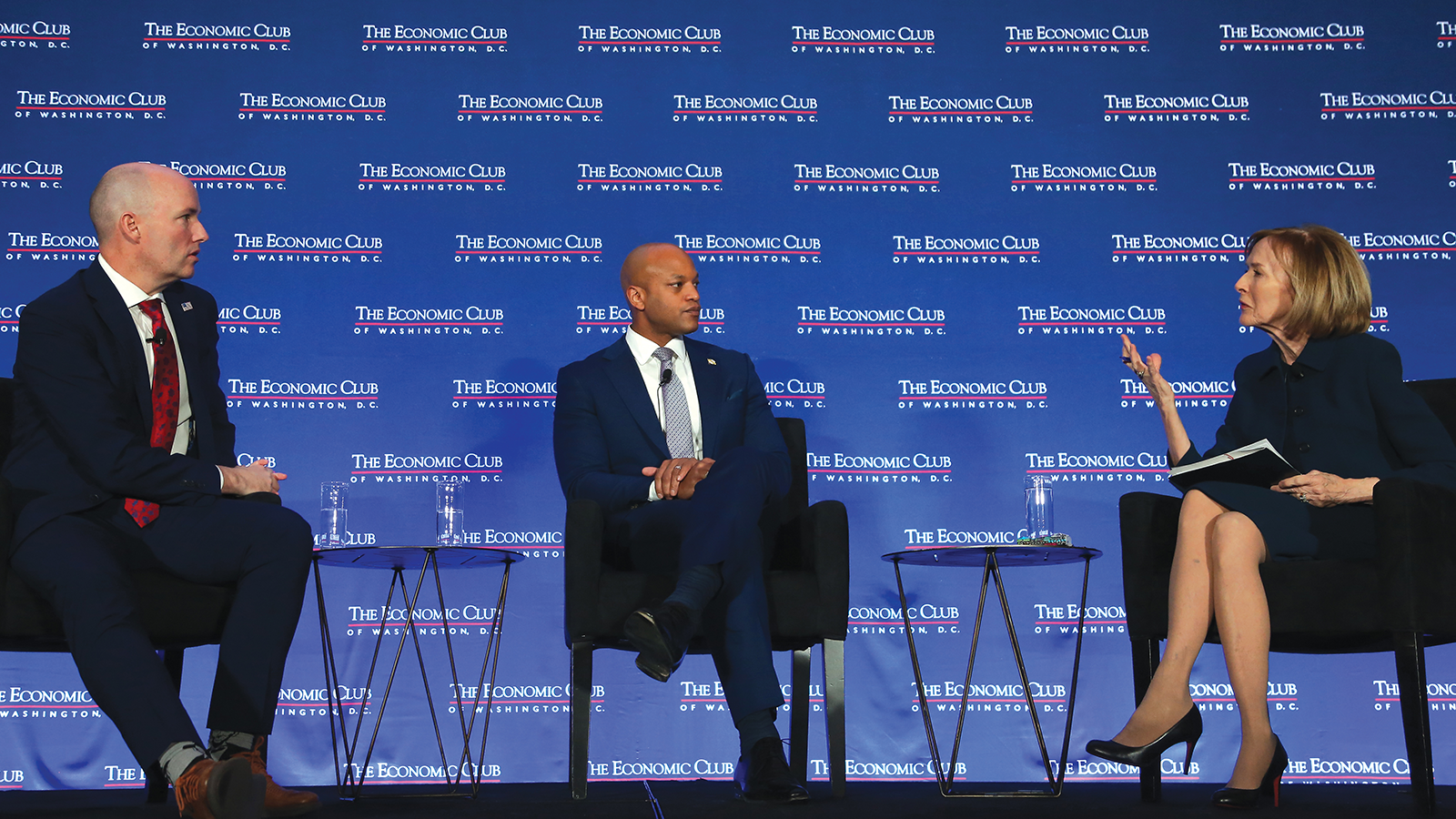
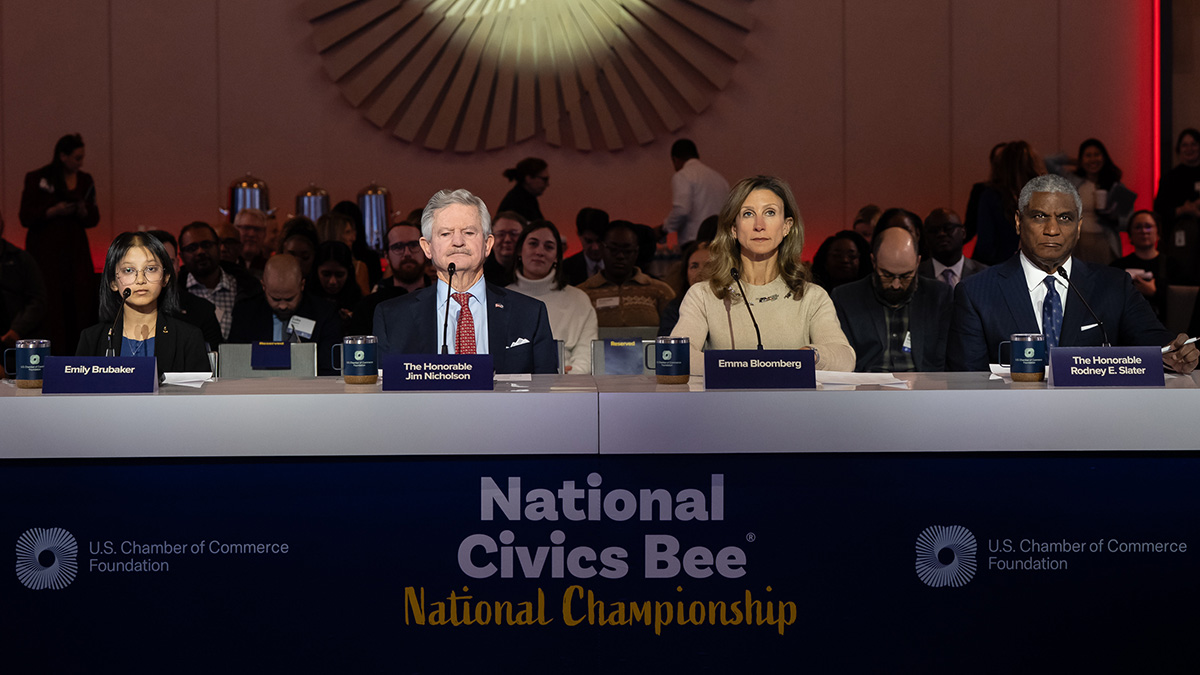
What started as an essay a year ago was now a project with a name: WISE, or the Washington Initiative for Student Equity, designed to address school funding disparities by incentivizing richer districts to redistribute their surplus dollars to underfunded schools. She had already discussed the idea with local lawmakers and nonprofits — something she knew would help her establish credibility. Now it was time to convince the four judges: a CEO, two former U.S. cabinet secretaries, and a 15-year-old from Alaska, Emily Brubaker, the 2024 National Civics Bee champion.
Brubaker says she was impressed by Nasir’s confident delivery, recalling her own anxiety as a contestant a year earlier. Throughout that competition, Brubaker heard a voice in the back of her mind that questioned her own ability — “All your competitors are super smart people, who says you can win?” — and sometimes felt insignificant among so many other young leaders. Now, as she studied the faces of the contestants on stage, she saw potential partners. “We need more people who are passionate about their projects to improve the world,” she says. “And this community of people makes me realize I’m not the only one.”
Last summer, after her National Civics Bee win, Brubaker enrolled in the Carnegie Young Leaders fellowship, where she leads an initiative with her Girl Scout troop to replace pollution-causing plastic glitter with an eco-friendly alternative. Her mentor is Sandhaus, the Civic Spring fellow who established Feeding Philly as a Central High School student, now a sophomore at Lehigh University. Sandhaus helped Brubaker’s team prep for testifying before the Anchorage School Board, which resulted in the board’s unanimous vote in December to ban plastic glitter. She also reminds Brubaker to delegate, advice that Brubaker says has made her leadership role “a lot less stressful and taxing.” The chance to turn her past mistakes into a way to help others has been an incredibly powerful experience, says Sandhaus. And having civically oriented peers makes Brubaker feel that change is possible.
When the judges’ scores for the 2025 National Civics Bee were tallied, Aarit Koul, a 14-year-old from Ohio, won the grand prize, a $100,000 education savings plan contribution. Nasir was awarded the third-place prize, a $15,000 cash award, and an enduring community. These days, she regularly texts with Brubaker and other Bee contestants. She’s already hoping that her 10-year-old sister will compete two years from now. “I want to set a good example,” Nasir says. “Whatever I do lays a blueprint for what she may do in her future.”
Wilfred Chan is the senior content editor and writer at Carnegie Corporation of New York.