
A New Nuclear Age
As expired treaties and emerging tech push the Doomsday Clock to 85 seconds to midnight, experts warn that global nuclear risk is at its highest point in decades
By Siobhan Roberts
May 13, 2026
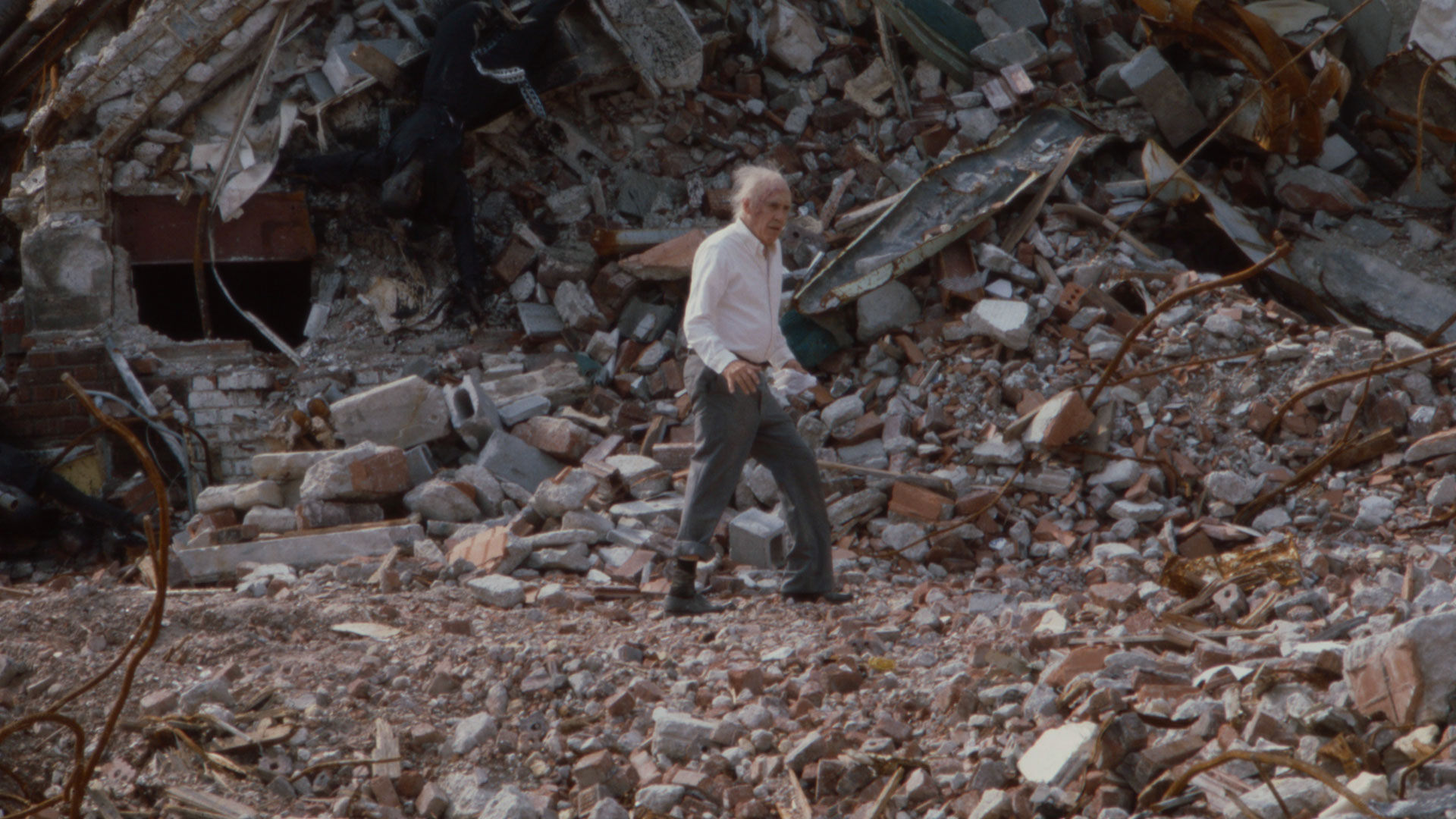
On the evening of November 20, 1983, amid rising global protests against the nuclear arms race, 100 million Americans turned on their TV and watched The Day After — that week’s ABC Sunday Night Movie. Set in Kansas and Missouri, the film depicts the aftermath of a fictional nuclear war between the United States and the Soviet Union.
“I remember how shocking it was,” said Rose Gottemoeller, then 30 and embarking on a career in nuclear policy and Russian relations. She watched the film with her husband in the living room of their home in Falls Church, Virginia. Their first child, Daniel, then eight months old, was nursing on her lap. The movie’s birth scene “packed a particular punch,” she recalled. “I was horrified at the notion that my child could have come into such a setting, what a horror that would have been.”
President Ronald Reagan wrote in his diary that the film was “very effective & left me greatly depressed.” It led to a policy shift known as the “Reagan reversal.” While in March 1983, Reagan had referred to the U.S.S.R. as the “evil empire” and proposed the Strategic Defense Initiative, a.k.a. Star Wars, in his 1984 State of the Union Address, he declared that “a nuclear war cannot be won and must never be fought.”
Some 40 years later, Alexandra Bell, president and CEO of the Bulletin of the Atomic Scientists, was invited to an advance screening of A House of Dynamite, a Netflix thriller depicting the race to respond to an unattributed missile launched at the United States. Over its first three days of release worldwide in October, the film drew 22.1 million views. Bell saw the film in August at the headquarters of the Motion Picture Association in Washington, D.C., one block north of the White House. Four nuclear experts of various stripes gathered by special invitation in the 118-seat theater, plus one security guard, who, at the movie’s abrupt cut-to-black end, exclaimed into the darkness: “WHAT?!!”
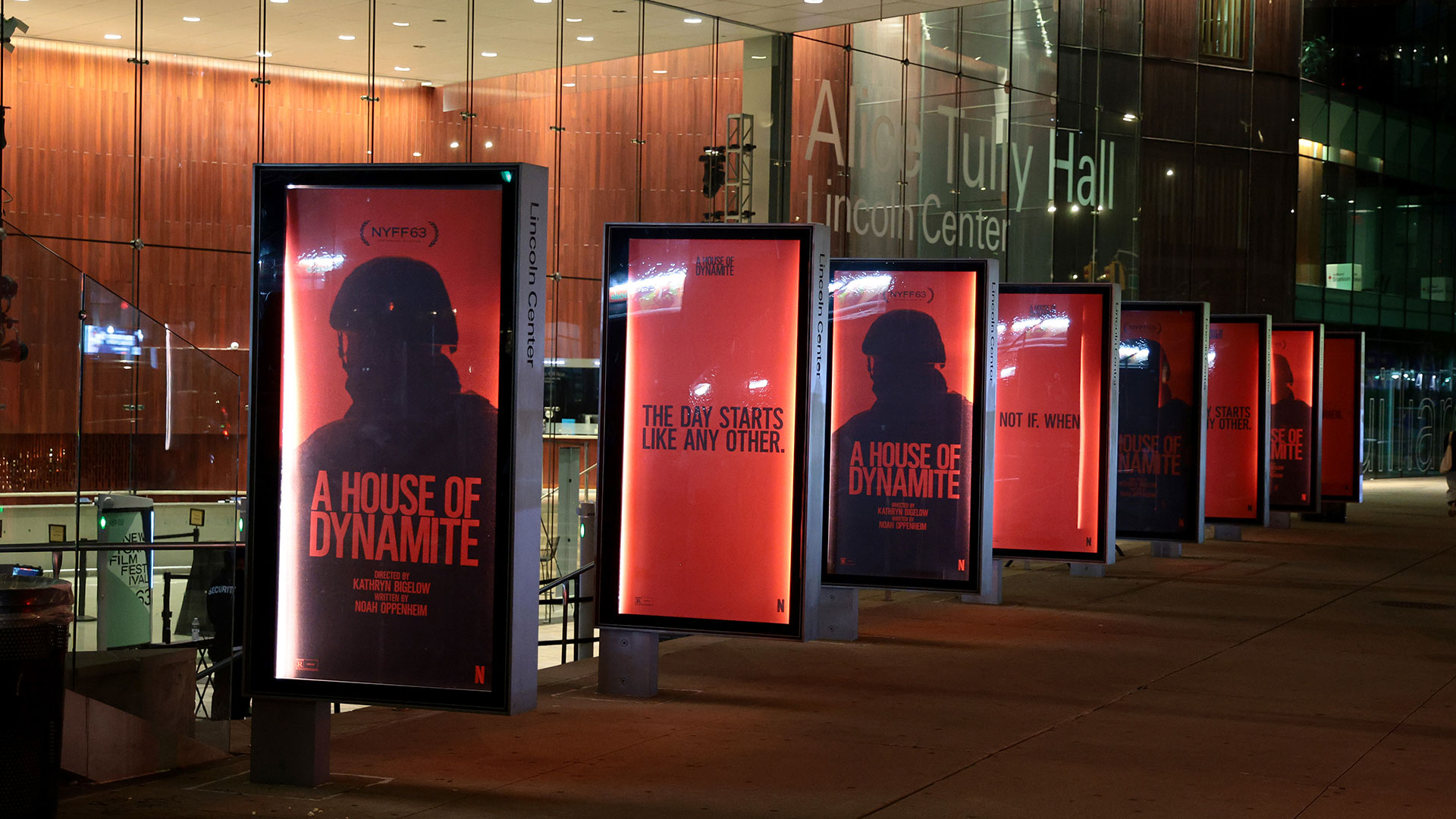
“It was such a visceral reaction,” recalled Bell, a policy expert and former deputy assistant secretary at the U.S. State Department. “I hear the same exclamation in my head all the time, but in more than 20 years of working on nuclear issues, I’ve never actually let it out.”
In her role as CEO of the Bulletin of the Atomic Scientists, a Carnegie grantee, Bell manages the Doomsday Clock, an annual chronicle of existential risk. Created in 1947 to monitor the long-term danger of nuclear weapons after World War II, the clock was originally set at seven minutes to midnight — midnight representing catastrophe. In the intervening years, the clock has been set back eight times and forward 19 times.
The farthest from midnight was 17 minutes in 1991, with the collapse of the Soviet Union and the end of the Cold War.
The nearest is 2026: 85 seconds to midnight.
Bell, who sits on the Bulletin’s science and security board that sets the clock, has often heard the feedback: “‘Oh, come on, be serious. Wasn’t it worse during the Cuban Missile Crisis?’”
"This is the first time in about 50 years that the U.S. and Russia have had no major constraints on each other’s nuclear arsenals."
Rose Gottemoeller
Former Assistant Secretary of State for Arms Control, Verification, and Compliance and New START negotiator
In October 1962, the Cuban Missile Crisis marked the height of the Cold War, the closest the United States and Soviet Union came to full-scale nuclear conflict. It opened a period of treaty negotiations, ultimately leading to, for instance, the 1970 Treaty on the Non-Proliferation of Nuclear Weapons (NPT), designed to prevent the spread of nuclear weapons and ultimately eliminate nuclear arsenals.
“What we aren’t seeing now that we did see following the Cuban Missile Crisis is a commensurate effort among leaders to reduce nuclear threats,” Bell said. “That kind of sustained leadership to reduce nuclear risk is almost completely absent.”
Since the end of the Cold War in 1991, the worldwide nuclear arsenal has decreased from a peak of some 70,000 warheads to a current tally of 12,187, according to an inventory of global nuclear warheads, part of a study updated in March by the Federation of American Scientists and conducted with support from Carnegie.
There are now nine nuclear-armed states: the United States, Russia, China, the United Kingdom, France, Israel, India, Pakistan, and North Korea. Other countries like Iran, Canada, Germany, Brazil, and the Netherlands possess the technology and means to develop nuclear weapons.
“Nukes are back at the center of international politics,” said Ankit Panda, Stanton Senior Fellow in the nuclear policy program at the Carnegie Endowment for International Peace and author of The New Nuclear Age: At the Precipice of Armageddon (Polity, 2025). “As relations between major powers grow difficult again, arms control has frayed and crumbled, removing many of the guardrails,” said Panda.
The NPT remains as a bedrock treaty, but other major arms control agreements are no longer in effect.
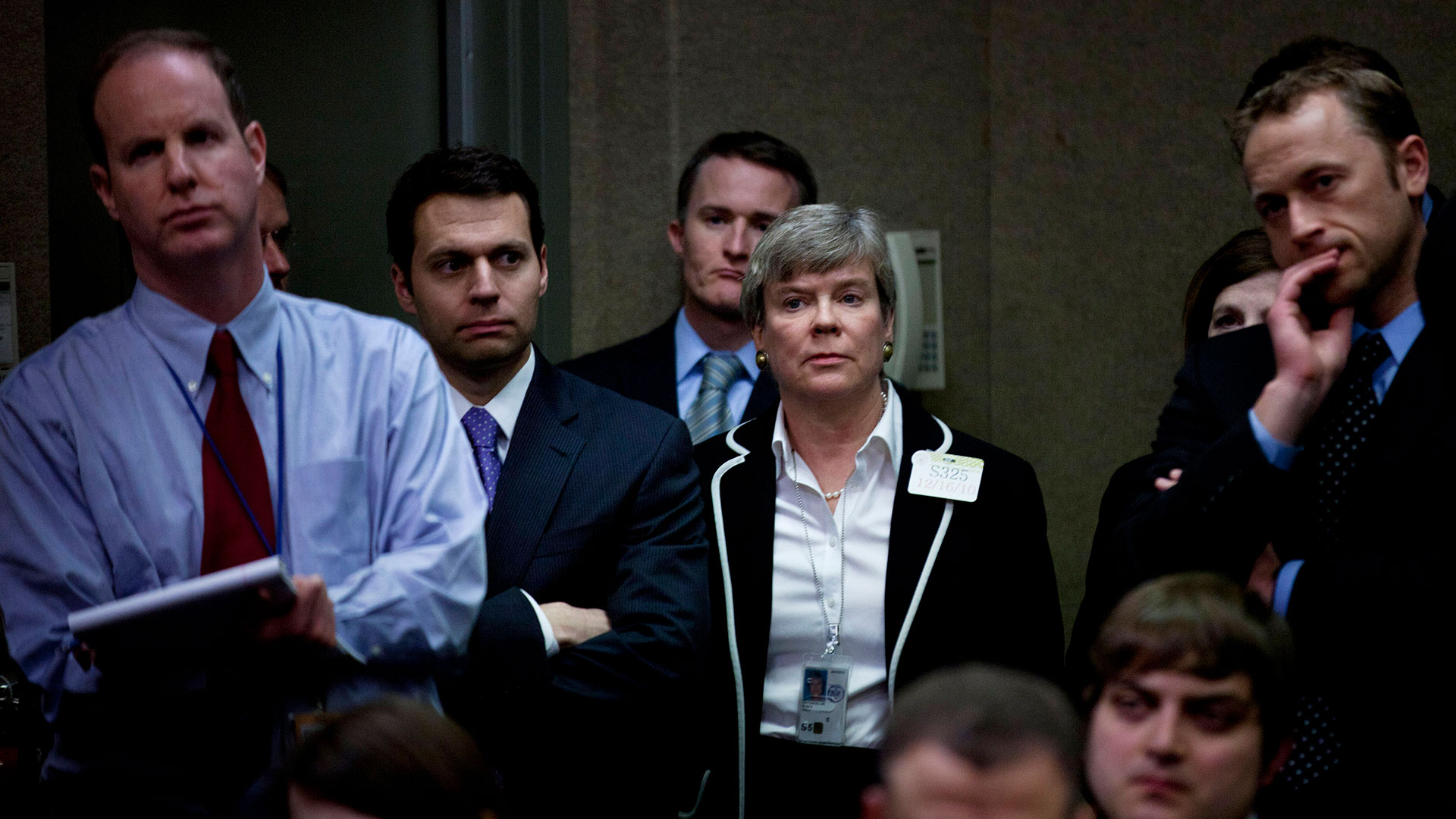
In February 2026, the New START treaty, a nuclear arms control agreement implemented in 2010, expired. “This is the first time in about 50 years that the U.S. and Russia have had no major constraints on each other’s nuclear arsenals,” said Gottemoeller, currently a lecturer at Stanford University and the author of Security Through Cooperation: Space, Nuclear Weapons, and U.S.-Russia Relations after the Cold War (Stanford University Press, 2026). As Assistant Secretary of State for Arms Control, Verification, and Compliance, she was the lead U.S. negotiator of the New START treaty.
Through the 1990s and 2000s, Gottemoeller recalled, arms control and the build-down of nuclear arsenals produced a sense of “a peace dividend.” Public awareness waned.
Meanwhile, emerging technologies, including AI and advancing capabilities in space, have presented new risks. AI technologies have long been used in nuclear operations, with, for instance, early warning systems for incoming attacks. Panda noted that among nuclear states, “one of the few areas where you have some degree of agreement is that AI should not be making the decision about when nuclear weapons should or should not be used.”
But, he added, “There’s a riskier set of conversations starting to take shape around what people call decision support. If political leaders are navigating uncertainty in a crisis, should they be receiving analytical assessments about what’s happening, the risks at play, from an artificial intelligence system?”
In the space domain, the United States assessed in 2024 that Russia was building a space-based, nuclear-armed anti-satellite weapon. In 2025, President Trump signed an executive order for the construction of the Golden Dome, a multilayer missile defense system with a constellation of space-based interceptors. “If the U.S. is going to exploit space, that creates a deep sense of potential anxiety in Russia and China,” said Panda. “They might have to plan for the worst, which will accelerate an arms race.”
"If political leaders are navigating uncertainty in a crisis, should they be receiving analytical assessments about what’s happening, the risks at play, from an artificial intelligence system?"
Ankit Panda
Stanton Senior Fellow in the nuclear policy program at the Carnegie Endowment for International Peace
Victoria Samson, in her role as chief director, space security and stability, for the Secure World Foundation, coedits the annual Global Counterspace Capabilities Report. The 2026 assessment documented an increase in the number of countries investing in space systems, seeking to enhance military capabilities and national security, and to develop counterspace capabilities that disrupt or destroy other systems via electronic warfare (such as satellite jamming and spoofing).
“Everyone wants a space plane,” said Samson — that is, an uncrewed spacecraft that conducts orbital missions. “Along the same lines,” she said, “a lot more countries are openly speaking about the need for bodyguard satellites that would deal with threats.” She added, “What does that mean exactly? It’s hard to say.”
“We’re in an exceedingly dangerous period right now,” said Scott Sagan, codirector of Stanford’s Center for International Security and Cooperation, a Carnegie grantee. “The last decade has been more dangerous, in terms of the risk of nuclear war, than any time since the height of the Cold War.” Specifically, Sagan cites the heightened tensions between North Korea and the United States, Russia’s war in Ukraine, and the war in Iran.
“I worry about a broad spectrum of risks,” said Alex Wellerstein, a historian of science and nuclear technology and a Carnegie grantee. Wellerstein, a professor at the Stevens Institute of Technology in Hoboken, New Jersey, and a visiting researcher at the Nuclear Knowledges program at the Center for International Studies at Sciences Po in Paris, created NUKEMAP, an interactive online simulation tool that makes the gradations of risk and harm more concrete. Choose your geographical target and the power of your warhead, then hit “DETONATE” and review the effects, such as blast damage and radiation radius.
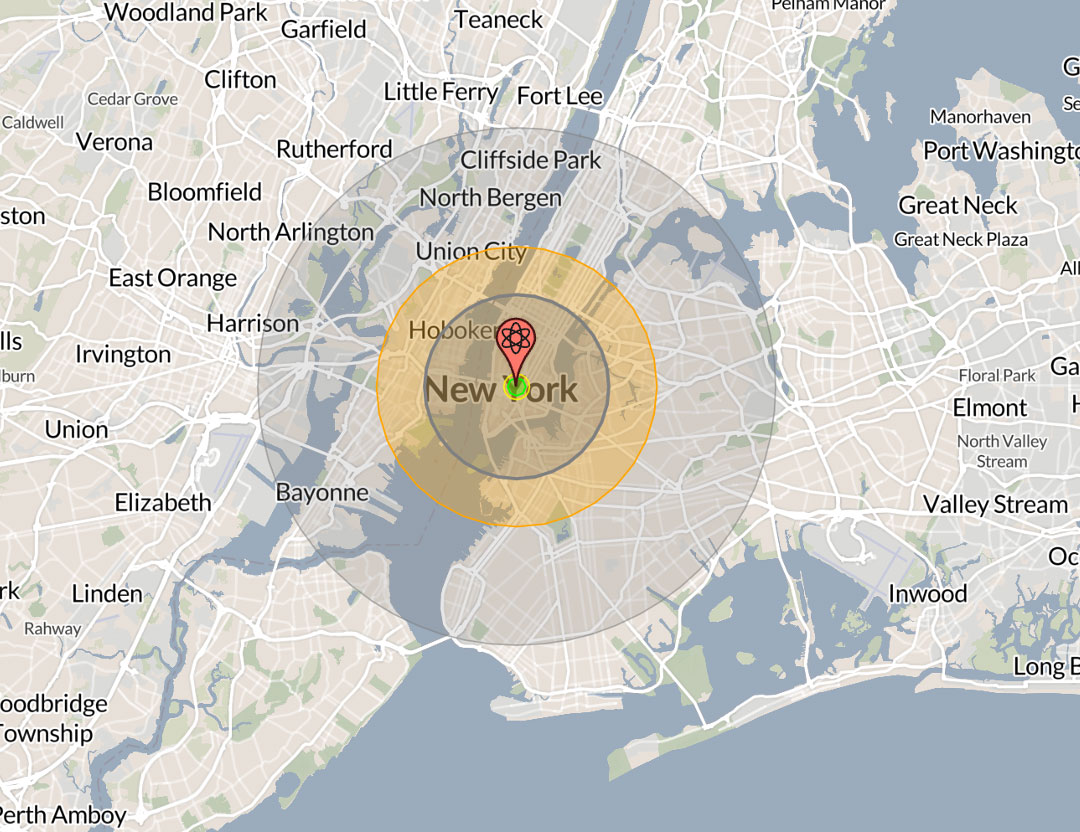
The satellite engineer Isobel Porteous used NUKEMAP in a Stanford course with cyber policy and security researcher Herb Lin. It was part of an assignment: Simulate a nuclear attack on your hometown — for Porteous, Manhattan — and then list people you know who would die. The exercise “has a permanent place in my memory,” she said.
Porteous was first pulled into this domain when she learned in 2024 of Russia’s advances in a space-based nuclear weapon. “That was a big eye-opening moment for me,” said Porteous, who is head of business development and a member of the founding team at EarthTraq, a startup that builds space technologies. “I realized that if such a weapon existed, it would be a direct threat to the space systems that I was working on, and that civil space systems, commercial space systems, would be affected.” This became the subject of her honors thesis, with Gottemoeller as one of her advisors.
In Gottemoeller’s Stanford course on “Verification for 21st Century Arms Control Treaties,” Porteous learned that effective arms control treaties must include verification. Porteous noted, for example, that there is a treaty that prohibits nuclear weapons in space — the 1967 Outer Space Treaty — but it does not include any way to verify compliance; there is no enforcement mechanism.
"The last decade has been more dangerous, in terms of the risk of nuclear war, than any time since the height of the Cold War."
Scott Sagan
Codirector of Stanford’s Center for International Security and Cooperation
She developed her thesis project investigating the use of satellites for treaty verification. “It’s something that I think should be implemented,” she said. “I’m trying to find ways to promote that from a policy and technical-development perspective as much as I can.” At the end of May, she will share her technical feasibility study at an outer space treaty dialogue hosted jointly by the Geneva Centre for Security Policy, the Council on Strategic Risks, and the Secure World Foundation.
As Alexandra Bell of the Bulletin sees it, norms and understandings — even, to some extent, trust and cooperation between adversaries — are what made the bygone era of détente possible.
“The process of maintaining nuclear stability between the U.S. and the Soviet Union and then the U.S. and Russia was a constant churn of meetings, of scientific exchanges, of dialogues, sometimes exceedingly frustrating and seemingly purposeless,” she said. But even in the worst of conditions, the superpowers were still meeting with each other, talking about how to manage nuclear risk. “We no longer have that between the U.S. and Russia,” she said.
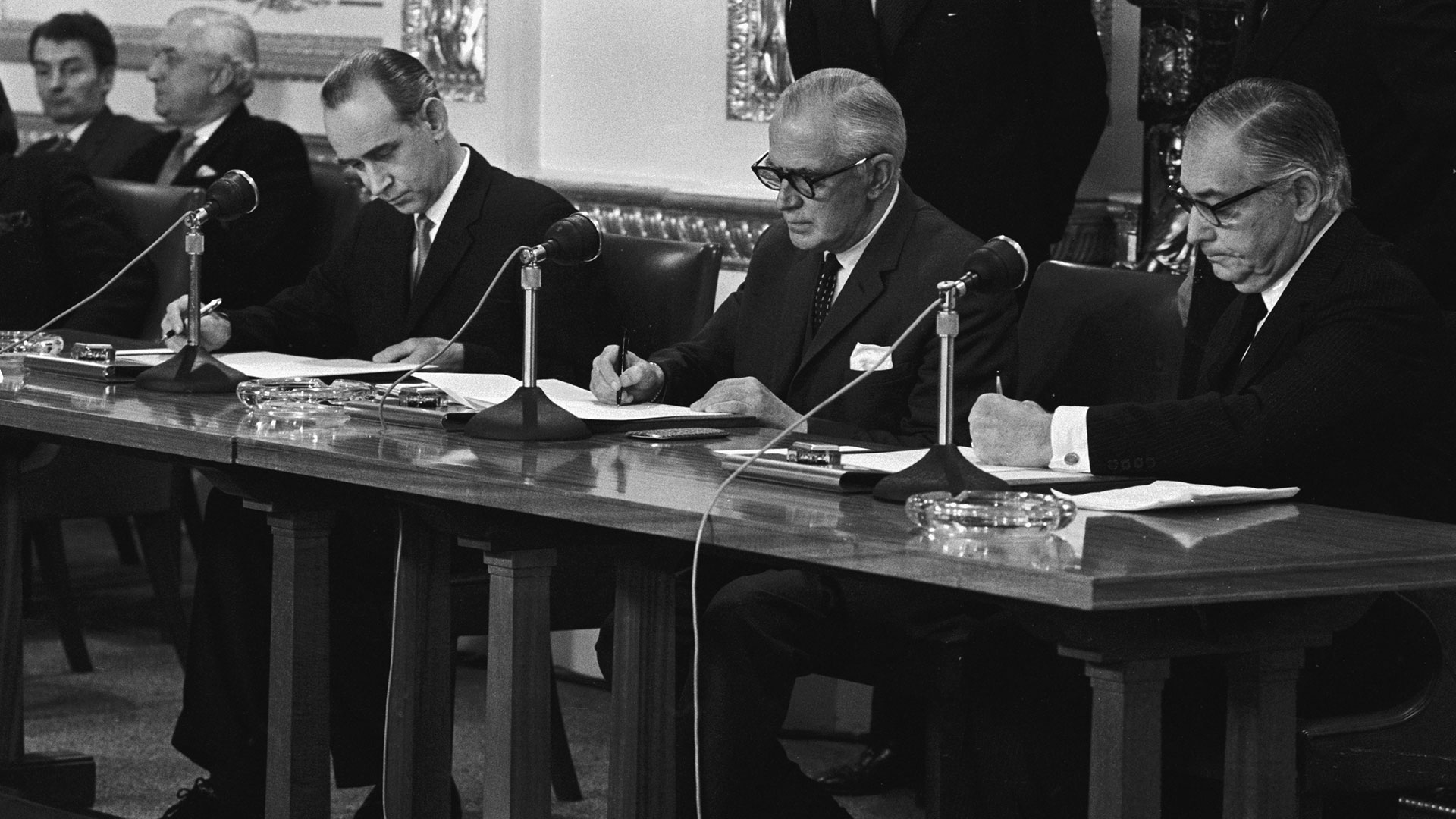
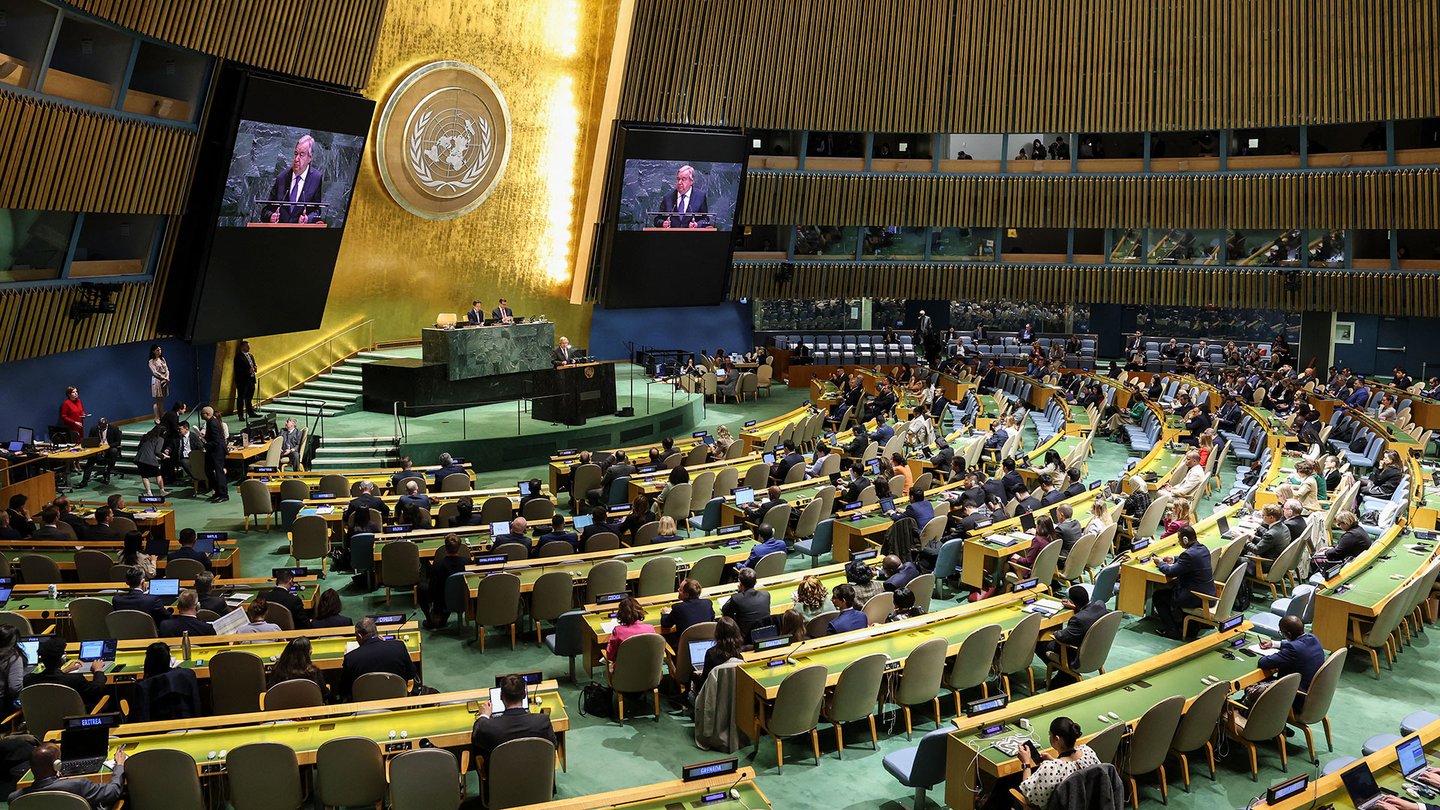
In this context, Bell emphasized the importance of the remaining Non-Proliferation Treaty and its 191 parties, nearly every country on the planet, including five of the nine nuclear-armed states: China, France, Russia, the United States, and the United Kingdom. Renewed indefinitely in 1995, a review conference takes place every five years. The 2026 review conference meets from April 27 to May 22 at the United Nations headquarters in New York, at a time when many countries are not particularly happy with one another.
“There are countries who feel like they’ve held up their end of the bargain and haven’t seen a return,” she said. “There are countries who feel like their security is at risk, and they want to prioritize their own national security over the overall goals of the treaty.”
“I would hope that all the states that are party to the treaty see that it’s more valuable to keep it in place than to withdraw,” said Bell. “The world absolutely cannot afford to lose that treaty.”
Siobhan Roberts is a regular contributor to The New York Times. Her latest book is Genius at Play: The Curious Mind of John Horton Conway (Princeton University Press, 2015).