
2025 Andrew Carnegie Fellows
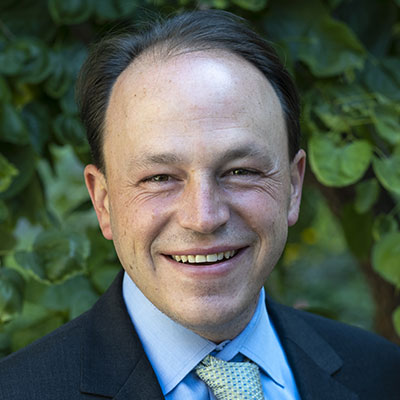
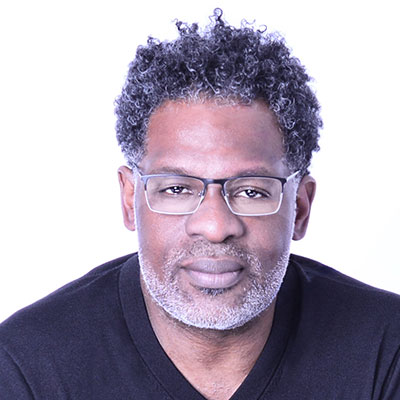
Christopher Sebastian Parker
Professor of Political Science, University of California, Santa Barbara
Christopher Sebastian Parker is a professor of political science at the University of California, Santa Barbara, where he also serves as Director of Graduate Studies and Chair of Graduate Admissions. A graduate of Los Angeles public schools, Parker earned a Bachelor of Arts from UCLA, and a master’s degree and PhD from the University of Chicago. he is the author of Change They Can’t Believe In: The Tea Party and Reactionary Politics in America (Princeton University Press, 2013), and Fighting for Democracy: Black Veterans and the Struggle Against White Supremacy in the Postwar South (Princeton University Press, 2009), both award-winning books. Parker’s work has appeared in several academic outlets, including the American Political Science Review, Daedalus, The Journal of Politics, Perspectives on Politics, the Du Bois Review, the Annual Review of Political Science, the Annual Review of Sociology, and Advances in Political Psychology. In the public domain, Parker has published pieces in The Washington Post, Politico, The American Prospect, Democracy, and with the Brookings Institution. His work has been featured in The New York Times, The Washington Post, and The Wall Street Journal, among other outlets. A product of South Los Angeles, and a veteran of the U.S. Navy, Parker resides in Santa Barbara.
Parker’s project, “Mobilizing Threat: How Polarization Affects Communities of Color,” moves the conversation around polarization from “Americans” writ large, to one that centers around communities of color. Insofar as the country is rapidly moving toward “minority-majority” status, it’s vital that we understand (1) how, if at all, the impact of polarization affects communities of color, (2) whether or not this differs from those in the cultural majority, and (3) how the interaction between communities of color and polarization affects the future of American democracy in terms of stability or unrest.